Table of Contents
Introduction
Every day of life quietly wears us down. Long hours of sitting, constant movement, and daily stress build up tension in our muscles. Before we notice, our body feels heavy, our back and shoulders tighten, and our energy starts to fade.
Even after resting, the stiffness remains. The usual ways of relaxing don’t seem to help, because the body needs more than just rest. It needs deep care that reaches where the stress actually lives, restoring both comfort and balance.
This is where Thai massage works beautifully. Through gentle stretching, rhythmic pressure, and mindful movement, it helps release tension, improve flexibility, and calm the mind. It’s not just a massage, it’s a way to feel light, relaxed, and reconnected with your own body again.
- Thai massage has more than 2,500 years of history and remains one of Asia’s most respected traditional wellness practices.
- The therapy differs from standard massages through its active techniques, dry treatment method, and focus on body movement.
- Herbal compresses, essential oils, reflexology, and deep stretching create distinct Thai massage experiences.
- The treatment addresses back tension, shoulder stiffness, reduced mobility, poor posture, tiredness, and mental stress.
- Consistent massage and responsible aftercare support long-term flexibility, energy, emotional balance, and physical wellness.
The Origins of Thai Massage
The history of Thai massage, known in Thailand as Nuad Boran (meaning “ancient massage”), stretches back more than 2,500 years. It began as a holistic healing system designed to bring balance to the body, mind, and spirit.
The practice is closely linked to Jivaka Komarabhacca, also known as Shivago Komarpaj, a respected physician from northern India and a close companion of the Buddha. He is honored in Thailand as the “Father Doctor” of traditional medicine for his deep understanding of healing and wellness.
As Buddhism spread from India to Southeast Asia around the 3rd or 2nd century BCE, Jivaka’s teachings and Ayurvedic healing principles made their way to Thailand. There, they merged with local herbal practices and Chinese acupressure techniques, creating a unique system of bodywork.
Over time, this evolved into what we know today as Thai massage. It is a therapeutic practice that combines assisted yoga stretches, rhythmic pressure, and mindful breathing. Together, these techniques help release tension, improve flexibility, and restore energy flow throughout the body.
Types of Thai Massage
There are different types of Thai massage available, like traditional Thai massage, Thai oil massage, Thai herbal massage, and Thai sports massage.
1. Traditional Thai Massage (Nuad Thai)
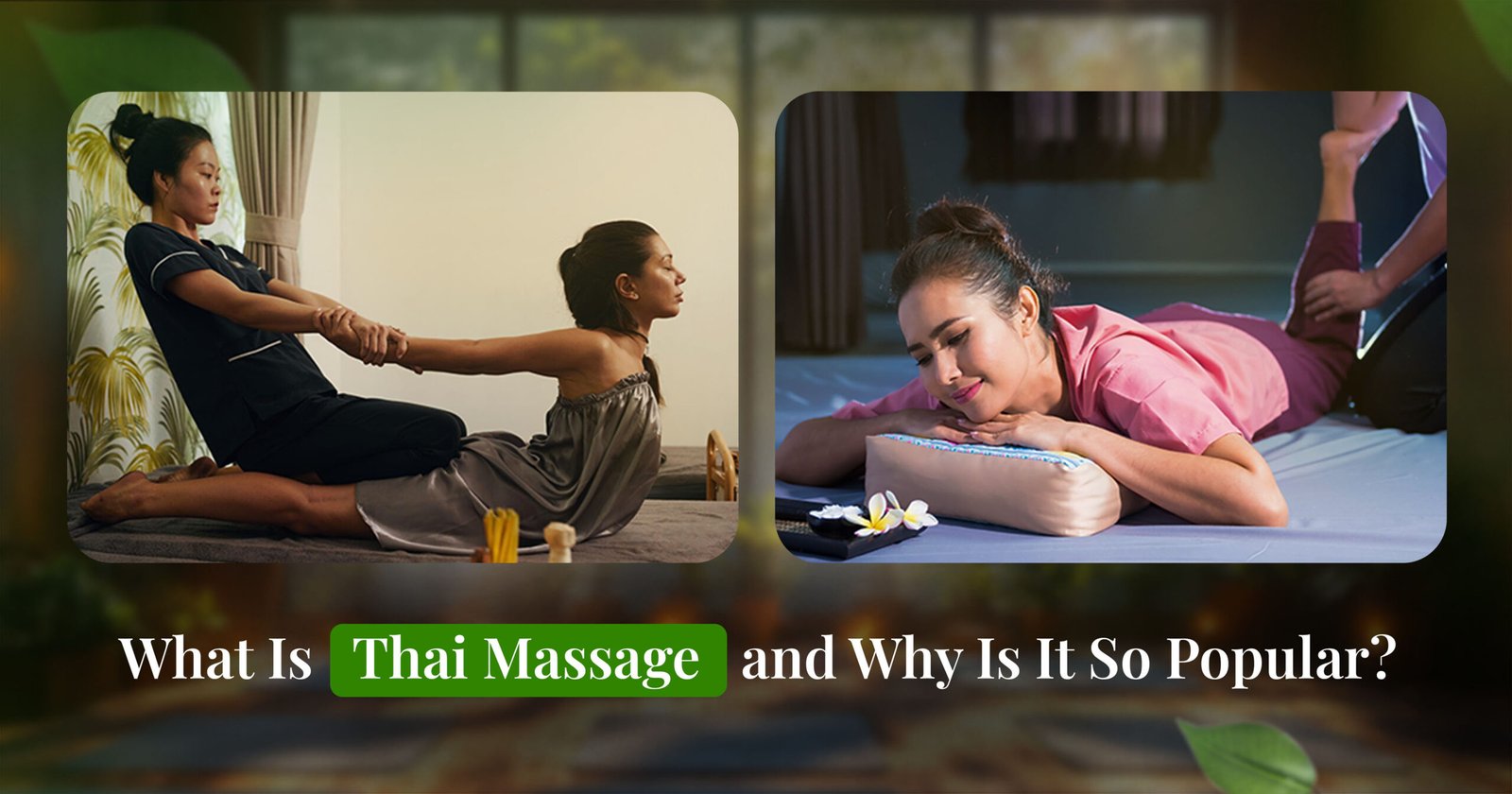
Traditional Thai Massage is the classic form of Thai massage, performed on a floor mat without oils. The therapist uses their hands, elbows, knees, and feet to apply pressure along the body’s energy lines, known as Sen lines. These lines are believed to crisscross the body and support the natural flow of energy.
2. Thai Oil Massage
A softer and more relaxing version of the traditional style, Thai oil massage combines long, flowing strokes with light pressure using essential oils. It soothes the muscles, hydrates the skin, and leaves a calming aroma that enhances relaxation, perfect for those who prefer a gentler experience.
3. Thai Foot Massage
Thai foot massage focuses on the feet and lower legs, using thumb pressure and wooden sticks to stimulate reflex points that correspond to different organs in the body. It helps improve blood flow, reduce swelling, and promote overall energy balance.
4. Thai Herbal Massage
Thai Herbal Massage uses warm compresses filled with natural herbs such as lemongrass, turmeric, and kaffir lime. The heated herbal bundles are pressed along the body to ease muscle stiffness, detoxify the skin, and enhance relaxation, a favorite for deep comfort and recovery.
5. Thai Sports Massage
Designed for athletes and active individuals, Thai sports massage combines stretching, deep tissue techniques, and joint mobilization. It helps improve muscle performance and speed up recovery after physical activity or trekking.
How Does Thai Massage Work?
Thai massage works by releasing tension and improving the flow of energy through the body’s Sen lines, the pathways that connect different organs and muscles. When these lines are blocked, you may feel stiff, tired, or unbalanced. The therapist uses a mix of stretching, gentle pressure, and rhythmic movements to open these energy lines and bring the body back into balance.
Unlike oil-based massages, Thai massage therapy is performed fully clothed on a floor mat. The therapist uses their hands, elbows, knees, and feet to apply pressure and guide your body through yoga-like stretches. This combination improves flexibility, boosts circulation, and calms the mind, leaving you relaxed, light, and re-energized.
Benefits of Thai Massage
Thai massage helps relax tight muscles, improve flexibility, support better circulation, reduce stress, and restore a sense of balance in the body. Through assisted stretching, rhythmic pressure, and mindful movement, it can leave you feeling lighter, calmer, and more energized.
- Releases Muscle Tension: Helps loosen tight muscles and relieve stiffness caused by long hours of sitting or physical activity.
- Improves Flexibility: The assisted stretches gently lengthen muscles and increase joint mobility.
- Boosts Blood Circulation: Rhythmic pressure and movement stimulate better oxygen flow throughout the body.
- Reduces Stress and Anxiety: Promotes relaxation and mindfulness, calming both body and mind.
- Enhances Sleep Quality: Encourages deep relaxation, helping you fall asleep faster and rest better.
- Increases Energy Levels: Restores the body’s natural energy flow, reducing fatigue and improving alertness.
- Improves Mental Clarity: The meditative nature of Thai massage therapy helps clear the mind and sharpen focus.
- Eases Body Pain: Effective for back pain, shoulder tension, and muscle soreness.
- Improves Posture and Body Balance: Stretching and alignment techniques help correct body imbalances.
- Promotes Emotional Well-Being: Encourages a sense of calm, connection, and inner peace.
Thai Massage VS Other Massages
Unlike most massages that focus mainly on muscle relaxation using oils and gentle strokes, Thai massage is an active, movement-based therapy that combines stretching, pressure, and breathing to restore balance and energy throughout the body.
| Category | Thai Massage | Other Common Massages |
| Technique | Uses stretching, acupressure, and yoga-like movements. | Involves long strokes, kneading, and circular motions. |
| Pressure Type | Rhythmic, firm, and dynamic pressure using hands, elbows, knees, and feet. | Gentle to medium pressure applied mostly with hands and fingers. |
| Body Involvement | Active participation, the therapist moves and stretches your body. | Mostly passive, the client lies still while the therapist works. |
| Massage Medium | Performed dry; no oil or lotion used. | Usually requires oils, creams, or lotions. |
| Clothing | Done fully clothed in loose, comfortable wear. | Typically done with minimal clothing or under a sheet. |
| Surface | Conducted on a floor mat for better movement. | Done on a massage table. |
| Focus Area | Focuses on energy flow (Sen lines) and body flexibility. | Focuses on muscle relaxation and tension relief. |
| Experience | Feels energizing, meditative, and restorative. | Feels soothing, calming, and stress-relieving. |
| Best For | Improving flexibility, posture, and energy balance. | Reducing tension, pain, and promoting relaxation. |
Thai Massage After Care
After a Thai massage, your body may feel deeply relaxed, stretched, and lighter. To get the best results, drink enough water, rest for a while, and avoid heavy exercise for the next 24 hours.
Here are some simple Thai massage aftercare tips to follow:
- Stay Hydrated: Drink plenty of water to Drink plenty of water to stay hydrated and support muscle recovery after your session.
- Rest and Relax: Allow your body to recover. Avoid heavy workouts or strenuous activity for the next 24 hours.
- Eat Light: Choose light, nourishing meals instead of heavy or oily foods to support your body’s natural detox process.
- Take a Warm Shower: A warm bath or shower helps further relax your muscles and improve circulation.
- Get Enough Sleep: A good night’s sleep enhances recovery and helps your body fully absorb the benefits.
- Stretch Gently: Gentle stretching the next day maintains flexibility and prevents stiffness.
- Listen to Your Body: If you feel slight soreness, it’s normal; your body is adjusting to the deep work done during the session.
- Book Regular Sessions: Regular Thai massage therapy helps maintain flexibility, reduce stress, and support long-term wellness.
Book Your Appointment for Thai Massage at Anura
Experience the healing touch of authentic Thai massage in Kathmandu at Anura Spa & Beauty Salon. Our skilled therapists combine traditional Thai techniques with a calm and welcoming environment to help you relax, recover, and restore balance in both body and mind.
Whether you’re easing sore muscles after trekking, relieving daily stress, or simply seeking deep relaxation, our Thai massage therapy offers a rejuvenating escape in the heart of Thamel. Each session is tailored to your comfort and energy needs, ensuring a truly personalized experience.
FAQs
What does a Thai massage include?
A Thai massage includes stretching, acupressure, and gentle yoga-like movements performed on a mat without oils. It focuses on improving flexibility and releasing muscle tension.
How much does a Thai massage cost in Nepal?
The Thai massage price in Nepal ranges from NPR 2,000 to NPR 4,500 for a 60-minute session, depending on the spa location, therapist experience, treatment type, and facilities provided.
Who should try Thai massage?
Anyone dealing with stress, stiffness, or fatigue can try Thai massage. It’s also great for active individuals needing muscle recovery. However, pregnant individuals and people with medical conditions should seek professional advice before booking a session.
Can I do Thai massage on a regular basis?
Yes. Regular sessions, every 2 to 3 weeks, help maintain flexibility, reduce stress, and improve overall wellness.
Is there any difference between Thai and regular massage?
Yes. Thai massage involves stretching and energy work, while regular massages use oils and focus on muscle relaxation.