Full Body Massage Explained: What It Includes & How It Helps
Table of Contents
Your body does not carry stress in one place only. For instance, long work hours tighten your neck, travel makes your legs feel heavy, and daily pressure often settles in your back and shoulders.
Because your muscles work together, tension in one area can affect how the rest of your body feels and moves. A quick massage on a sore spot gives short-term comfort, but it rarely gives complete relief. You need care that works across the whole body, not just one painful spot.
A full body massage treats you from head to toe instead of focusing on one sore spot. It gives balanced support to your major body areas that carry daily strain and helps you feel more relaxed.
In this guide, you’ll learn what a full body massage is, what it includes, common types, and the main benefits for your body. You’ll also get tips to prepare for your session and understand what happens before, during, and after it.
What is a Full Body Massage?
A full body massage is a complete massage therapy treatment that works across the major muscle groups that support daily movement. The therapist uses touch, pressure, rhythm, and movement to relax tight muscles, improve blood flow, and help your nervous system settle. Depending on the massage type, your session includes warm oil, stretching, deep pressure, gentle strokes, or heat therapy.
The purpose of a complete body massage is to relax connected muscle groups, ease built-up tension, and help your system slow down. Since stress often spreads through more than one area, this treatment gives your whole body balanced care rather than focusing only on one painful point.
What Areas are Massaged in a Full Body Massage?
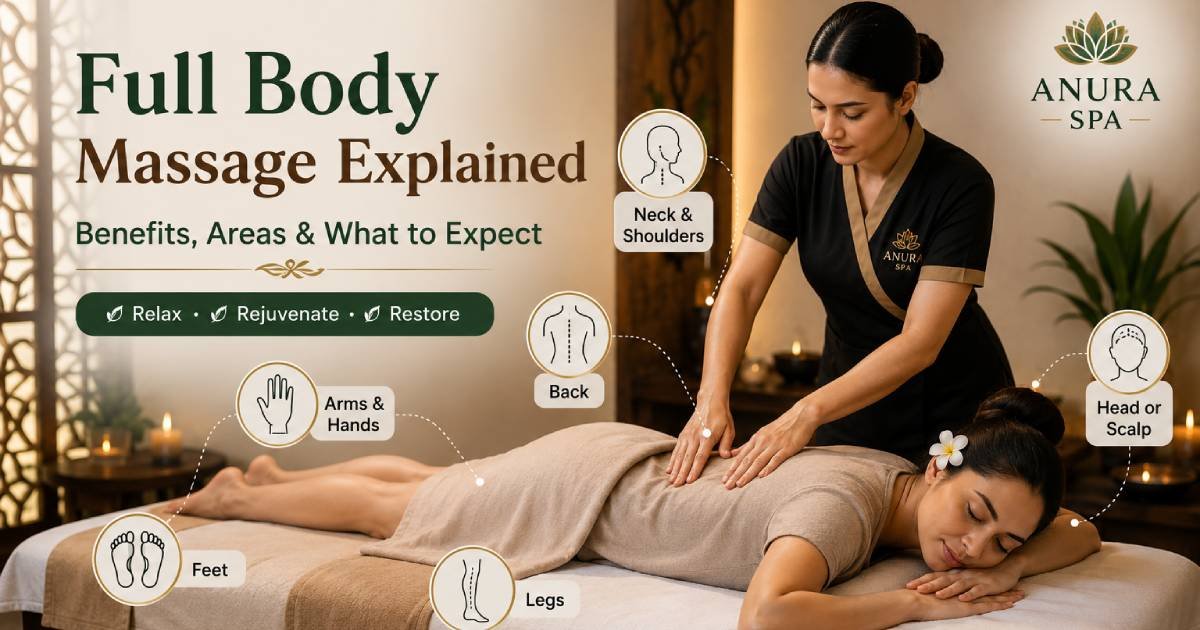
A complete body massage includes areas that carry daily tension, such as your back, shoulders, neck, arms, legs, and feet. Depending on the massage style and your comfort, the practitioner also works on your head, scalp, or other tense areas.
- Back: The back is usually treated with steady strokes and pressure because it often holds tension from sitting, standing, lifting, and poor posture.
- Neck and shoulders: The neck and shoulders receive focused care to ease stiffness caused by desk work, phone use, travel, daily strain, or long hours in one position.
- Arms and hands: The arms and hands are massaged to release strain from typing, carrying bags, using devices, or doing repetitive daily tasks.
- Legs: The legs are worked on to relax the thighs, calves, and lower muscles that become tired from walking, trekking, exercising, or standing for long periods.
- Feet: The feet receive calming pressure to reduce heaviness, soothe soreness, and support a more relaxing experience.
- Head or scalp: Some treatments include a gentle head or scalp massage to calm your mind, reduce temple tension, and ease tightness around the upper neck.
What are the Different Types of Full Body Massage?
Common full-body massage types include Swedish, Deep Tissue, Aromatherapy, Thai-stretching, Sports, Four-hand, and Hot stone massage. These styles all support whole body relaxation, but they use different techniques to match your comfort, tension level, and recovery needs.
- Swedish Massage: Swedish massage is the classic choice when you want a gentle full-body session. The practitioner uses long strokes, soft kneading, and light-to-medium pressure across your back, shoulders, arms, legs, and feet.
- Deep Tissue Massage: Deep tissue massage gives your full body stronger and more focused muscle work. Instead of staying on the surface, the massage professional uses slow strokes and firm pressure to reach deeper layers of tight muscles.
- Aromatherapy Massage: Aromatherapy massage focuses on both your body and senses. Gentle strokes are paired with essential oils like lavender, eucalyptus, or chamomile to create a calm and soothing experience.
- Thai-Stretching Massage: Thai-stretching massage feels more active than a regular oil-based full-body massage. Instead of only using strokes, the specialist gently moves your arms, legs, back, and hips through assisted stretches while applying steady pressure.
- Sports Massage: Sports massage is designed for recovery and movement support. If you train, trek, exercise, or do physical work, your muscles often carry repeated strain. This session gives focused attention to tired and overused areas.
- Four-Hand Massage: Four-hand massage gives you a richer and more immersive full-body experience. Two therapists work at the same time with matched movements, so your mind stops tracking every touch and settles more deeply.
- Hot Stone Massage: Hot stone massage uses smooth, heated stones to warm tight muscles before deeper hands-on work begins. The warmth helps soften tissue faster and gives you comfort, warmth, and deep relaxation in one visit.
What are the Benefits of a Full Body Massage?
A whole body massage helps your muscles relax, supports better circulation, and gives your mind a break from daily stress. Since the treatment works across several areas, the effects are more balanced, which leaves your body feeling lighter, calmer, and more comfortable.
- Reduces Stress: Gentle touch, steady pressure, and a quiet setting help calm your nervous system, slow down mental pressure, and give you a peaceful break from daily strain.
- Eases Muscle Tightness: Tight muscles in your back, shoulders, legs, and neck start to loosen during the session, which makes your movement less stiff afterward.
- Improves Blood Flow: Hands-on pressure encourages blood flow through soft tissues, and better circulation helps your body feel warmer, lighter, and less tense.
- Supports Better Sleep: When your muscles relax and your mind becomes calmer, it becomes easier to rest. Many people feel sleepy or deeply peaceful after a massage.
- Helps with Body Fatigue: A long workday, travel, trekking, or exercise leaves you feeling drained. Full-body care gives tired muscles time to relax, recover, and feel refreshed.
- Improves Flexibility: Massage types that include stretching or pressure work help loosen tight muscles, reduce stiffness, and support smoother movement.
How to Prepare for a Full Body Massage?
Before your full-body session, keep your meal light, stay hydrated, and reach the spa a few minutes early so you feel calm and ready. You should also communicate with your therapist about your pain areas, pressure preference, and health concerns for a safer experience.
- Eat Lightly Before Your Appointment: Avoid a heavy meal before your appointment because lying down with a full stomach makes you feel uncomfortable.
- Stay Hydrated: Keep your body hydrated with enough water before and after the massage. Avoid drinking more than needed, as it may leave you feeling bloated or uneasy.
- Arrive a Little Early: Reach the spa a few minutes before the appointment, so you have time to settle, change, and share your concerns.
- Dress Comfortably: Wear loose, easy-to-change clothes that make you feel relaxed before and after your appointment.
What to Expect from a Full Body Massage?
In a full-body session, the massage specialist first understands your concerns, then works across your main muscle groups with pressure that matches your comfort. Afterward, you feel relaxed, loose, or slightly tired, so drink water, rest, and avoid heavy workouts, alcohol, and very hot showers right away to let your muscles recover smoothly.
Before the Session
- The practitioner asks about your concerns, pressure preference, and health condition.
- You get time to change and settle into a private room.
- A towel or sheet keeps you covered for comfort and privacy.
During the Session
- The therapist usually starts with gentle strokes to warm your muscles.
- They apply pressure to major areas like your back, neck, shoulders, arms, hands, legs, and feet.
- Tight areas receive more attention through kneading, steady pressure, or slow strokes.
After the Session
- Your body often feels lighter, calmer, looser, or slightly sleepy.
- Mild soreness is normal after deeper pressure work.
- Drink enough water and rest for a while after the treatment.
- Avoid heavy workouts and very hot showers right after the bodywork.
Wrapping Up
A full body massage helps you reconnect with yourself when built-up tension, stiffness, or tiredness starts to affect your day. It supports relaxation from your neck down to your feet, giving you a fuller sense of relief.
The best massage experience begins when the session feels personal, not copied from a fixed routine. At Anura Spa, the therapy starts with your comfort, your pressure preference, and the areas that need more care.
With a skilled massage specialist and full-body treatments for physical fatigue, stiffness, and post-trek soreness, your session becomes a reset for your whole body. Book your appointment with Anura Spa now for a calm, refreshing massage experience.
FAQs
Is a full-body massage good for stress?
Yes, a full-body massage is good for stress because it gives your whole body proper care. With gentle pressure, slow strokes, and a calm setting, it calms your nervous system and gives your mind a proper break.
How long does a full-body massage take?
A full-body massage usually takes 60 to 120 minutes. A 60-minute session covers the main body areas, while a 120-minute appointment gives the therapist more time to focus on tight or tired muscles.
How much does a full-body massage cost?
A complete body massage in Kathmandu usually costs around NPR 1,500 to NPR 6,000 for 60 to 120 minutes. The price varies depending on the spa, massage type, therapy length, and add-ons like steam, sauna, or jacuzzi.
Do I need to undress completely for a full-body massage?
No, you do not need to undress completely for a full body massage. Undress only to your comfort level, and the therapist keeps your body covered with a towel or sheet while uncovering only the area being worked on.
When should you get a full-body massage?
You should get a whole body massage when your whole body feels tired, stiff, or heavy, rather than sore in only one area. It gives you a proper reset when work, travel, exercise, or long hours on your feet start affecting how you move and rest.