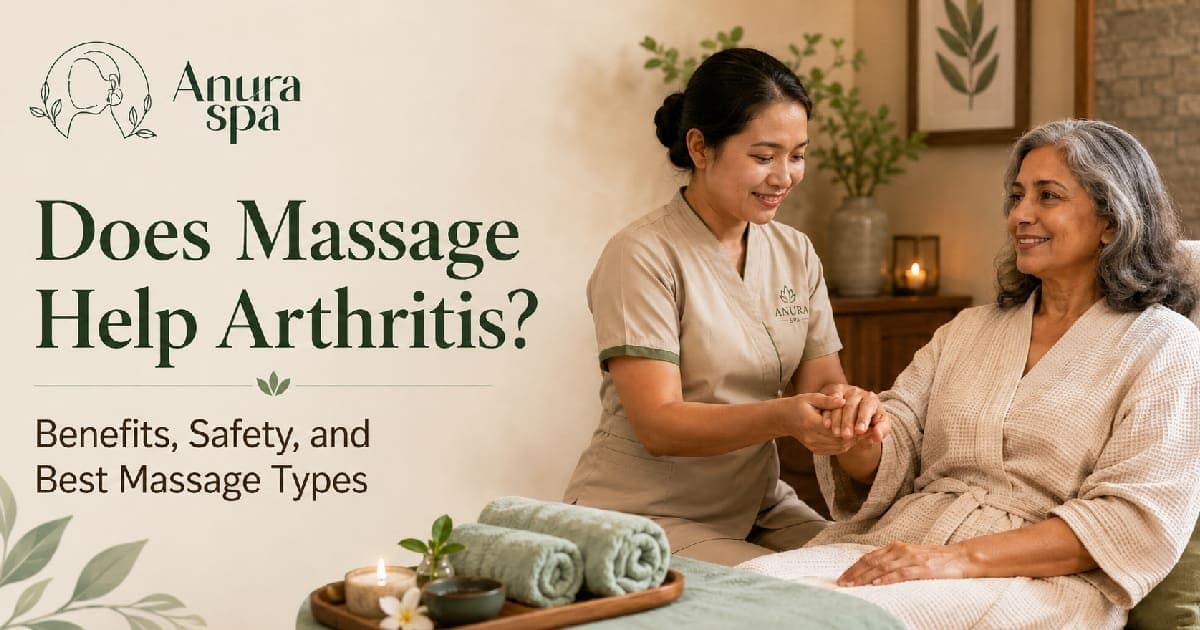
Does Massage Help Arthritis? Benefits, Safety, and Best Massage Types

You are currently viewing Does Massage Help Arthritis? Benefits, Safety, and Best Massage Types
Massage Help Arthritis

Arthritis often leaves your joints painful, stiff, swollen, or difficult to move. It can also tighten the muscles around the affected area, making everyday activities such as walking, climbing stairs, opening jars, or turning your neck more challenging.

Many people wonder whether massage can help relieve these symptoms and whether it is safe for every type of arthritis. The answer depends on the type of arthritis you have, the condition of your joints, and the massage technique used.

In this guide, you’ll learn how massage may help people with arthritis, the benefits and limitations of massage therapy, the safest massage techniques, when massage should be avoided, and how to choose the right treatment for your needs.

Key Highlights:
  • Massage provides short-term relief from arthritis pain and stiffness.
  • It relaxes tight muscles around your affected joints.
  • Research supports massage for knee osteoarthritis and hand arthritis.
  • Gentle or moderate pressure is safer than forceful pressure.
  • Do not massage hot, swollen, or actively inflamed joints.
  • Massage supports your arthritis care but does not cure the condition
  • Tell your therapist which joints are affected before the session begins.

Does Massage Help Arthritis?

Yes, massage can help relieve arthritis symptoms by reducing pain, stiffness, and muscle tension around affected joints. As the surrounding muscles relax, joints often move more comfortably, making everyday activities easier.

Research reviewed by the Arthritis Foundation suggests that regular massage may reduce pain and stiffness while improving grip strength and mobility in people with knee and hand arthritis. Mayo Clinic also recognizes massage as a complementary therapy that may provide short-term relief from arthritis pain and stiffness.

However, massage does not cure arthritis or prevent it from progressing. Whether you have osteoarthritis, rheumatoid arthritis, or psoriatic arthritis, massage helps manage symptoms rather than treat the underlying condition. It works best alongside medical care, regular physical activity, and adequate rest.

How Does Massage Help Arthritis Pain?

Massage targets the muscles and tissues surrounding your painful joints. When arthritis limits your movement, nearby muscles often tighten to protect the area. This tightness adds more discomfort and makes the joint feel stiffer.

Controlled massage pressure relaxes these muscles. It also reduces physical tension and helps you move the area more comfortably.

The pressure must remain comfortable. Moderate pressure often works better than a very light touch, but harder does not mean better. Stop when the massage causes sharp pain, throbbing, numbness, or increased soreness.

What Does Research Say About Massage for Arthritis?

Research says that massage reduces pain, stiffness, and movement problems, especially in people with knee osteoarthritis and hand arthritis. The results support massage as a short-term treatment for symptom relief, not as a cure or replacement for medical care.

1. Massage for Knee Osteoarthritis

A Duke Health study followed about 200 adults with knee osteoarthritis. Those who received a one-hour massage each week for eight weeks reported better pain, stiffness, mobility, and physical function. The study treated massage as an addition to standard arthritis care rather than a replacement for it.

For your knees, massage works best on the surrounding muscles, including your thighs, calves, and hamstrings. Strong pressure directly over a swollen knee or painful joint line does not belong in the session.

2. Massage for Hand Arthritis

A small study discussed by the Arthritis Foundation found that people with hand or wrist arthritis experienced less pain and anxiety after regular massage. Their grip strength also improved.

Gentle self-massage gives you a practical option between professional sessions. Keep the pressure light around swollen knuckles and avoid pulling or forcefully bending your fingers.

What the Research Does Not Show

Research shows that massage can provide short-term relief from arthritis symptoms such as pain and stiffness. However, it does not rebuild cartilage, cure arthritis, or prevent joint damage.

Massage should be used as part of a broader treatment plan alongside medication, exercise, physical therapy, weight management, and guidance from your healthcare provider.

Does Massage Help Different Types of Arthritis?

Massage affects each type of arthritis differently. The right pressure, timing, and technique depend on whether your joints are stable, inflamed, swollen, or painful.

1. Osteoarthritis

Massage helps reduce stiffness and muscle tension around joints affected by osteoarthritis. It works well around the knees, hands, shoulders, hips, neck, and lower back.

It does not rebuild worn cartilage. Its role is to ease surrounding tension and help you move more comfortably.

2. Rheumatoid Arthritis

Gentle massage suits rheumatoid arthritis when your condition is stable and your joints are not actively inflamed. During a flare, avoid strong pressure on joints that feel hot, swollen, tender, or painful.

Tell your therapist which joints are affected before the session. They should use light pressure, avoid forced movement, and adjust their position for comfort.

3. Psoriatic Arthritis

Massage helps relax tight muscles around joints affected by psoriatic arthritis. It also reduces the strain that builds when pain changes the way you sit, stand, or walk.

Avoid massage over cracked plaques, open wounds, skin infections, severely irritated skin, and hot or swollen joints. Your therapist should work around these areas instead of directly over them.

4. Gout

Do not massage a joint during an active gout attack. The affected area is often hot, red, swollen, and extremely painful.

Wait until the flare has settled before returning to massage, and follow the treatment advised by your healthcare professional.

Which Areas of the Body Benefit From Arthritis Massage?

Arthritis massage works best on the muscles and soft tissues around the affected joints. Common areas include:

  • Hands and fingers: Helps reduce stiffness and supports easier finger movement and grip. Use slow strokes across the fingers, palms, wrists, and forearms, and avoid pressing hard on swollen knuckles.
  • Knees: Focuses on the thighs, calves, and hamstrings that support the joint. This helps reduce tension and makes walking or bending more comfortable.
  • Feet and ankles: Eases stiffness around the soles, arches, heels, toes, ankles, and lower legs. Avoid massage during gout attacks or over wounds, swelling, infections, or numb areas.
  • Neck: Relaxes tight muscles across the neck, shoulders, and upper back. Avoid forceful twisting and heavy pressure over the spine.

Always avoid direct pressure on joints that feel hot, swollen, severely painful, or actively inflamed.

What Type of Massage Is Best for Arthritis?

Swedish Massage

Swedish massage is a suitable starting choice for arthritis. It uses long strokes, gentle kneading, and light-to-moderate pressure.

This style relaxes your muscles without placing harsh pressure on sensitive joints. It also helps reduce general stress and body tension.

Gentle Therapeutic Massage

Gentle therapeutic massage targets the muscles around your affected joints. Your therapist adjusts the pressure, body position, and session length according to your symptoms.

This approach suits you when stiffness, limited movement, or tenderness makes a standard massage uncomfortable.

Deep Tissue Massage

Deep tissue massage helps tight muscles, but it does not suit inflamed, fragile, or severely painful joints.

The pressure should remain on suitable muscle areas. It should not press directly into swollen joints, damaged tissue, or bony areas. Do not choose deep tissue massage during an active flare. Stop immediately when the pressure causes pain rather than a comfortable muscle release.

Self-Massage

Self-massage works well for your hands, fingers, feet, forearms, shoulders, and muscles around your knees.

Keep your movements slow and your pressure comfortable. A short daily routine works better than one aggressive session.

Does Heat and Massage Help Arthritis?

Yes, gentle heat followed by massage helps loosen stiff muscles and joints. Use a warm towel, warm shower, or heating pad before the massage. Keep the temperature warm rather than hot.

Do not use heat on:

  • A hot and swollen joint
  • Broken or irritated skin
  • An area with reduced sensation
  • A fresh injury
  • An active inflammatory flare

Heat works best for stiffness and tight muscles. Cold treatment is more suitable when swelling and inflammation are active.

How Should You Prepare for an Arthritis Massage?

Prepare for an arthritis massage by telling your therapist about your condition, painful joints, and any health concerns. This helps them choose safe techniques and the right amount of pressure for your needs.

Before your massage, tell your therapist:

  • Which type of arthritis do you have?
  • Which joints hurt?
  • Whether you have an active flare.
  • Which movements cause pain?
  • Whether you have a joint replacement.
  • Whether you have osteoporosis.
  • Whether you have nerve or circulation problems.
  • Which pressure level feels comfortable?

Ask your therapist to begin with gentle pressure and speak up immediately if any movement or technique causes pain. Choose a therapist experienced in working with people who have arthritis, as every treatment should be adapted to your condition rather than following a fixed routine.

Conclusion

Massage helps reduce arthritis pain, stiffness, and muscle tension when the therapist uses the right pressure and works carefully around the affected joints. Experience matters because poor technique or too much pressure can increase discomfort, especially around swollen or sensitive areas.

For this reason, choose a trusted spa with trained therapists who understand how to adjust the session to your condition. At Anura Spa, each massage is planned around your comfort, symptoms, and preferred pressure level, helping you enjoy a safer and more suitable experience.

Contact us to discuss your needs and choose a massage that suits your comfort, symptoms, and preferred pressure level.

Frequently Asked Questions

Does massage help rheumatoid arthritis?

Yes, massage helps rheumatoid arthritis by reducing muscle tension, pain, and stiffness during stable periods. Do not massage hot, swollen, or actively inflamed joints during a flare.

Does hand massage help arthritis?

Yes, hand massage helps arthritis by reducing stiffness and supporting finger movement and grip strength. Avoid strong pressure on swollen knuckles or painful joints.

Does massage help arthritis in the fingers?

Yes, massage helps arthritis in the fingers by easing muscle tension and supporting comfort and movement. Use slow, gentle strokes around your fingers, palms, and wrists, and do not pull or force painful finger joints.

Does massage help knee arthritis?

Yes, massage helps knee arthritis by relaxing the muscles that support the knee and reducing stiffness. Avoid strong pressure directly over the kneecap or swollen joint.

Does deep tissue massage help arthritis?

Yes, deep tissue massage can help arthritis by relieving tight muscles around affected joints, but it is not suitable for inflamed, fragile, or actively painful joints. Use controlled pressure and stop if it causes pain.

Do heat and massage help arthritis?

Yes, heat and massage help arthritis by relaxing stiff muscles and making gentle massage more comfortable. Do not apply heat to joints that are already hot, swollen, or actively inflamed.

Does foot massage help arthritis?

Yes, foot massage helps arthritis by reducing muscle tension and stiffness around the feet and ankles. Avoid massage during a gout attack or over swollen, numb, or injured areas.

Does massage help neck arthritis?

Yes, massage helps neck arthritis by relaxing tight muscles around the neck, shoulders, and upper back. Avoid forceful neck twisting or direct pressure over the spine.

Is a massage gun safe for arthritis?

Yes, a massage gun can be safe for arthritis when used on the surrounding muscles at a low setting. Do not use it directly on joints, bones, swollen areas, or painful tissue.

Can massage make arthritis worse?

Yes, massage can make arthritis worse if strong pressure is applied or massage is performed during an active flare. Gentle techniques are generally safer for sensitive joints.

Is massage a cure for arthritis?

No, massage is not a cure for arthritis. It helps reduce pain, stiffness, and muscle tension, but it does not cure arthritis or reverse joint damage.